Each of us has a skill or lesson someone else can benefit from. For National Mentoring Day, make two commitments: offer an hour of mentoring and ask for an hour yourself.
Somewhere, someone is trying to learn something you already know.
It might be a practical skill you use every day, a lesson that took you years to understand, or an insight you gained through a difficult experience. Something that feels ordinary to you could help someone else take an important step forward.
Every one of us carries knowledge, experience or a useful perspective. So here is the question I want us to sit with:
What are we doing with what we know?
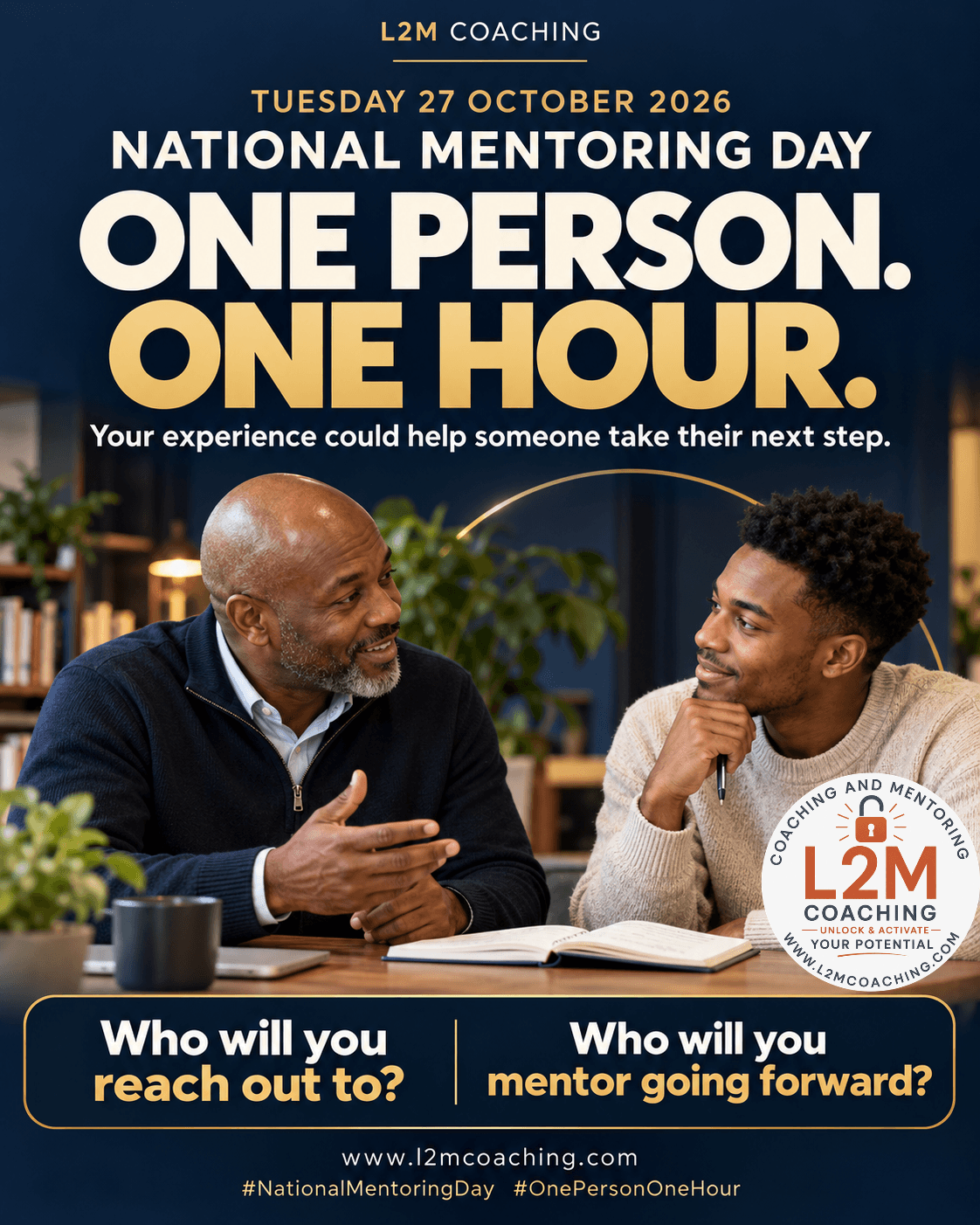
Tuesday 27 October 2026 is National Mentoring Day. Its One Person, One Hour campaign invites us to give an hour to mentor someone. That is a practical place to begin. It also raises a bigger question about how we help others grow throughout the year.
Think about the skills you have developed through work, family life, education, sport or community involvement. Perhaps you can help someone prepare for an interview, understand a process, organise a project, handle a difficult conversation or take their first steps into leadership.
You may have learned how to recover after a setback. You may know how to ask for help, build a useful routine or approach a problem more calmly.
Who could benefit from a lesson you have already learned?
We can become so familiar with our own abilities that we stop recognising their value. We call something “common sense” because we have practised it for years, forgetting how much we once needed someone to explain it.
Take a moment to consider what people regularly ask you for help with. Think about something you can now do confidently that once felt difficult. Remember the guidance you wish you had received earlier.
There may be a mentoring conversation waiting in each of those answers.
Sharing that knowledge takes intention. We need to make time, notice who could benefit, and ask what support would actually be useful to them.
Then we need to help the learning take root. We can explain our thinking, demonstrate a skill, invite someone to practise, and reflect together on what happened. Over time, those conversations can help someone develop confidence in their own judgement.
How are you cultivating your skills in someone else?
Earlier this year, the InternationalWomensDay.com campaign for International Women’s Day, on 8 March, carried the theme Give To Gain. It encouraged generosity and collaboration to advance gender equality.
That message gives me a useful way to think about mentoring more widely: when we share knowledge, we create opportunities for learning on both sides.
The person being mentored may gain a clearer understanding, a practical skill, encouragement or a useful next step. The mentor can gain something valuable too.
Explaining what we know asks us to organise our thinking. A thoughtful question can expose an assumption we have carried for years. Helping someone apply an idea in a different situation can deepen our own understanding of it.
Imagine helping a colleague learn to delegate. As you explain how to agree expectations and review progress, they ask how much freedom someone should have to choose their own approach. Their question may make you examine how you delegate yourself.
You have shared a skill, and the conversation has also invited you to improve it.
Mentoring gives us opportunities to practise listening, patience, communication and reflection. It can also introduce us to experiences and perspectives we would otherwise miss.
The learning can move in both directions.
That makes the second part of this challenge just as important: what are you doing to seek mentoring for yourself?
We can have years of experience and still benefit from guidance. We can lead a team and still need help with a difficult decision. We can support others confidently while recognising an area in which we are still learning.
Think about where you feel stuck, uncertain or ready to develop. Who has relevant experience? Whose approach could help you see the issue differently?
That person might be a colleague, a peer, someone in your community or someone younger with a skill you have yet to develop.
Be specific when you reach out. You could say:
“I’m working on improving how I lead difficult conversations. I value your approach. Would you be willing to spend an hour sharing what you’ve learned and helping me think through a situation?”
A clear request gives the other person something concrete to respond to. It also asks you to take responsibility for your learning: arrive prepared, listen carefully, try an agreed action and reflect on the result.
We can be mentors and learners at the same time.
For National Mentoring Day, I invite you to make two commitments:
Offer an hour. Identify one skill or lesson you could share. Reach out to someone and ask whether it would be useful. Agree what they would like to work on.
Ask for an hour. Identify something you want to develop. Approach someone whose experience could help, with a clear question and a willingness to act on what you learn.
During either conversation, make room to understand the situation before offering your perspective. Explore what could work in that person’s circumstances. Finish with a practical next step and, if you both wish, agree when to check in again.
One hour gives us a starting point. Following through helps turn the conversation into learning.
Before you leave this page, write down two names: someone you could offer support to, and someone you could learn from.
Then send the first message.
Who will benefit from what you know? And whose experience will you make time to learn from?
Reading creates awareness. Coaching creates lasting change. Book a free 30-minute conversation to explore what this could look like in your specific situation.
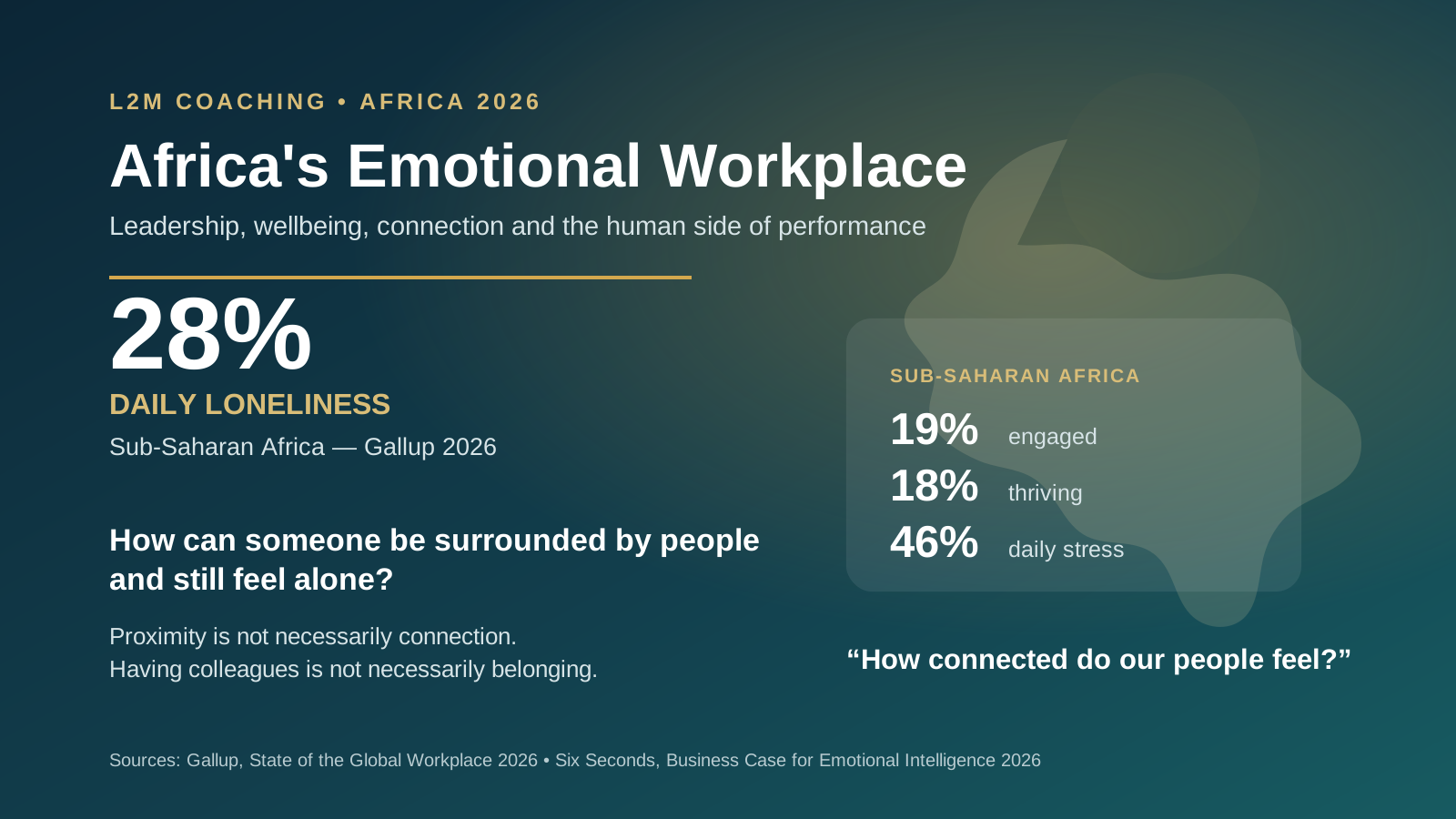
A 2026 evidence report for African leaders: 28% of employees in Sub-Saharan Africa report daily loneliness. What does that mean for Ubuntu, Sawubona, belonging, emotional intelligence and sustainable performance?
By Lloyd Munyaviri | L2MCoaching After Blaming Foreigners, Who Do We Blame When AI Takes the Jobs? For years, in many societies, when people have felt economically squeezed, one of the easiest narratives has been: “foreigners are taking our jobs.” We have heard it in the UK. We have heard it in South Africa. We have heard it in communities where people are struggling with unemployment, poor wages, insecure work, rising costs, stretched public services and a deep sense that life is becoming...
As part of the Monthly Connect Better Podcast Series we run at L2MCoaching (everyone is invited) once a month, a number of topics for discussion are suggested and this one is a popular request and I hope to do it justice: In relationships, one of the hardest conversations to have is the conversation about rejection, intimacy, emotional needs and unmet expectations. It is a sensitive subject because it can easily be misunderstood. When a partner says “no”, that “no” must be respected. No one...