The Weight We Carry: Reflections on Stress, Responsibility and Looking After Ourselves
LM
Lloyd Munyaviri
EMCC Accredited Coach
I’m deeply grateful for the invitation to speak at a recent Men’s Wellness event focused on “The Weight We Carry: Men, Pressure, Stress & Looking After Ourselves.” It was an honour to be part of such an important conversation, alongside passionate facilitators and community leaders who are committed to creating safe spaces for honest dialogue and wellbeing. While the event was centred on men’s experiences, what stood out to me most is this truth: Stress does not discriminate. It affects men...
I’m deeply grateful for the invitation to speak at a recent Men’s Wellness event focused on “The Weight We Carry: Men, Pressure, Stress & Looking After Ourselves.”
It was an honour to be part of such an important conversation, alongside passionate facilitators and community leaders who are committed to creating safe spaces for honest dialogue and wellbeing. While the event was centred on men’s experiences, what stood out to me most is this truth:
The form may differ but the impact is universal.
Why Stress Feels So Heavy
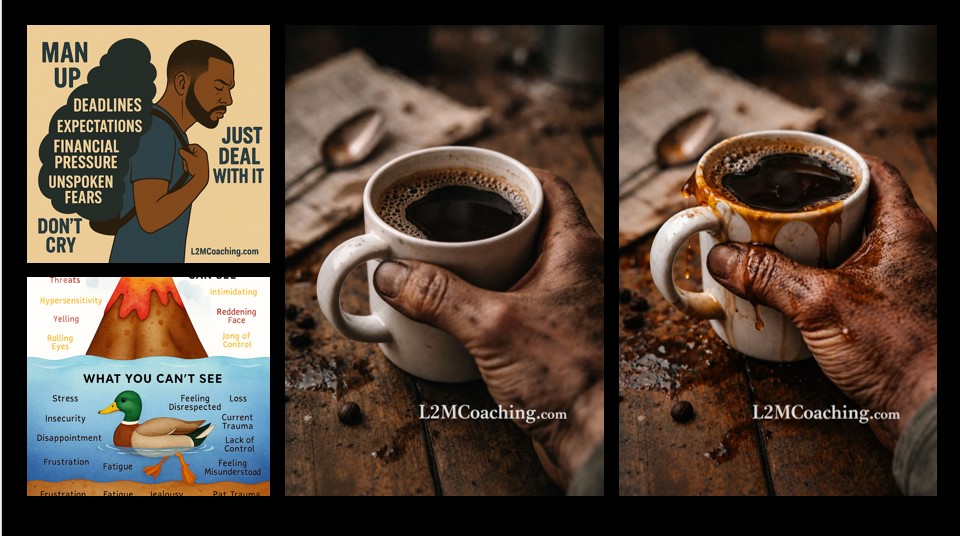
Stress often comes from responsibility. providing, caring, meeting expectations & trying to “hold it all together.” At the beginning of the year in particular after the festive season stress tends to spike. Financial pressure, disrupted routines, health concerns, school fees, work demands and the unspoken expectation to “start the year strong” all collide at once.
Many people don’t start the year refreshed.They start it already depleted.
One of the key metaphors I shared during the talk was this:
The problem isn’t stress itself. The problem is holding it for too long without release.
Stress, Emotions, and the Body
Another important insight is that stress doesn’t just live in the mind, it lives in the body.
When stress has nowhere to go, it often shows up as:
This is why emotional awareness matters so much. Many of us default to saying “I’m fine”, but “fine” is not an emotion. Learning to name what we’re actually feeling overwhelmed, pressured, exhausted, anxious reduces the intensity of those feelings. Naming emotions helps us regulate them, rather than being controlled by them.
Silence Makes Stress Heavier
One of the most powerful and sobering realities we discussed is how silence amplifies stress.
When people talk about what they’re carrying, support often follows. When people stay silent, pressure accumulates. This isn’t just a men’s issue but culturally and socially, many men have been taught to endure quietly. Over time, that silence can become dangerous. Talking is not weakness; it’s emotional intelligence and self-preservation.
But the message applies to all of us:
You don’t need to tell everyone everything. You need one safe conversation.
What Actually Helps
Awareness alone isn’t enough we need practical tools. Some of the most effective stress-management practices are also the simplest:
A Shared Responsibility
What encouraged me most about the event was the sense of community. Real wellbeing doesn’t happen in isolation. It happens when we:
Whether you’re a man or a woman, a leader or a learner, this applies:
I’m thankful to have been part of a space that recognised this and I hope the reflections from that session encourage more open, compassionate, and practical conversations about stress and wellbeing in all our lives.
For a a cheat sheet with more on coping with stress follow this link and download: L2M Coaching Managing Stress Cheat Sheet: https://drive.google.com/file/d/1TVV_vrweqURm1N5Uk-4fv9i5W-oOzga-/view?usp=drive_link
Reading creates awareness. Coaching creates lasting change. Book a free 30-minute conversation to explore what this could look like in your specific situation.
Discussion
No comments yet — be the first to share your thoughts.
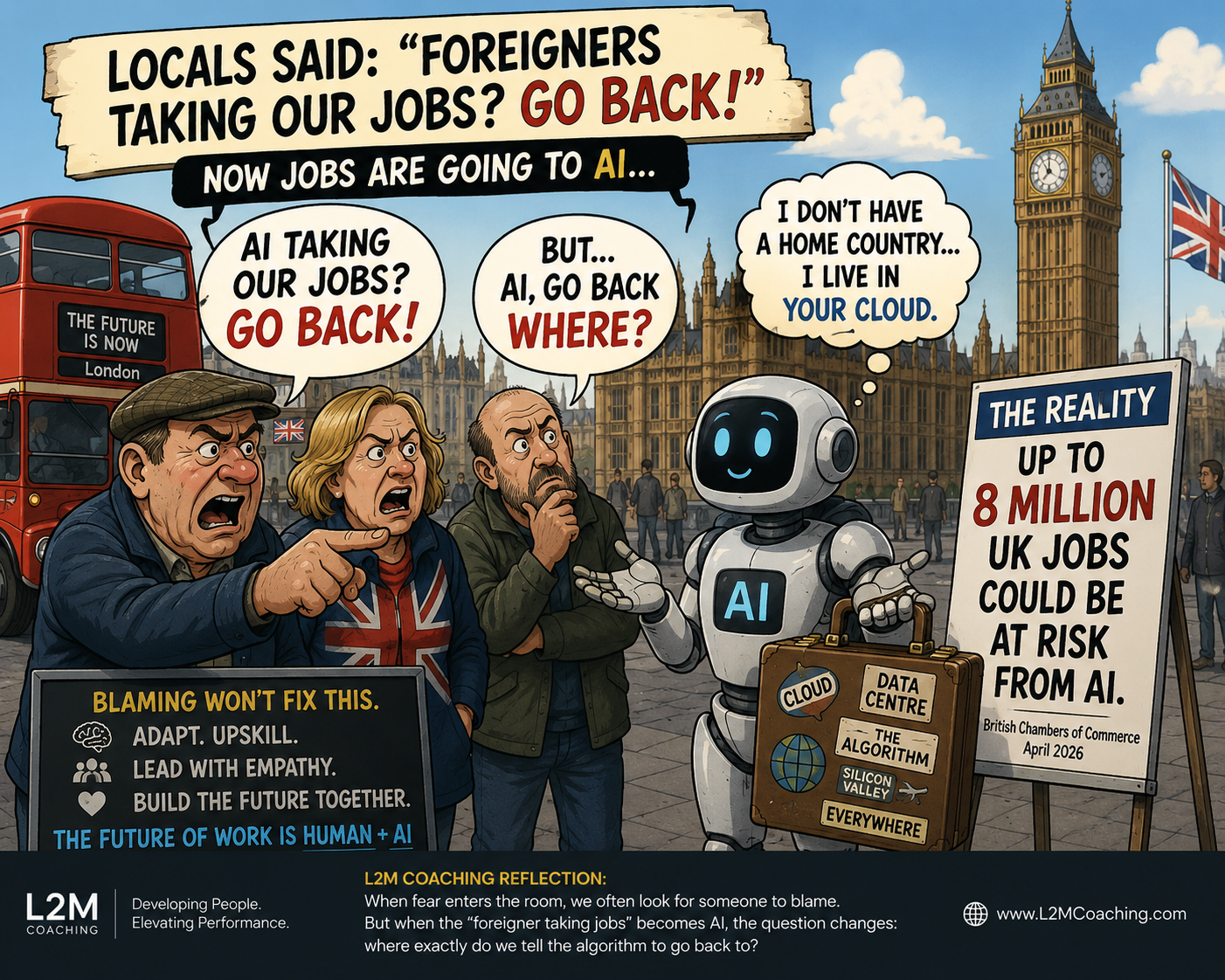
By Lloyd Munyaviri | L2MCoaching After Blaming Foreigners, Who Do We Blame When AI Takes the Jobs? For years, in many societies, when people have felt economically squeezed, one of the easiest narratives has been: “foreigners are taking our jobs.” We have heard it in the UK. We have heard it in South Africa. We have heard it in communities where people are struggling with unemployment, poor wages, insecure work, rising costs, stretched public services and a deep sense that life is becoming...
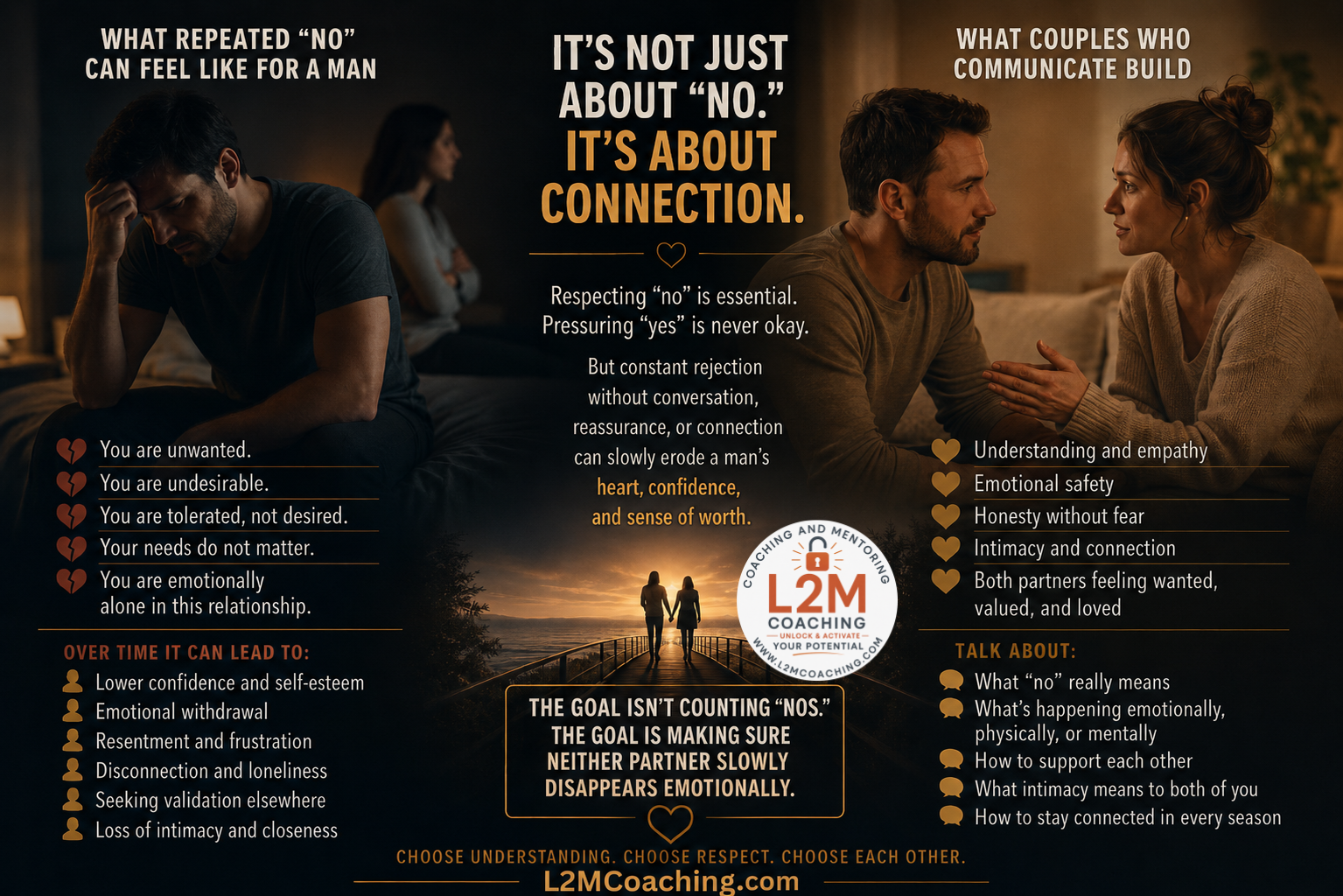
As part of the Monthly Connect Better Podcast Series we run at L2MCoaching (everyone is invited) once a month, a number of topics for discussion are suggested and this one is a popular request and I hope to do it justice: In relationships, one of the hardest conversations to have is the conversation about rejection, intimacy, emotional needs and unmet expectations. It is a sensitive subject because it can easily be misunderstood. When a partner says “no”, that “no” must be respected. No one...
Why knowledge alone is not enough and what we need to learn instead. We’ve been conditioned to believe something powerful: “Education is the answer.” Say it enough times, and it becomes truth. Build systems around it, and it becomes policy.Repeat it to selves and our children and it becomes belief. But let’s pause for a moment and ask a question that rarely gets asked: Education… then what? Because if education truly was the answer, we wouldn’t have so many educated people feeling stuck,...