Leadership Lessons fromfrom Our January Book Club book: Chinua Achebe's Things Fall Apart: Reflections
LM
Lloyd Munyaviri
ICF Certified Coach
This week our L2MCoaching One Book A Month Leadership Book Club session focused on Things Fall Apart and it was, without exaggeration a powerful and deeply engaging conversation. Before diving into the lessons, I want to begin with a genuine thank you . Thank You to Our Book Club Community To everyone who attended the session and to the facilitators thank you.The quality of discussion, reflection, honesty and contribution was exceptional - 90 mins was not enough we ended up extending the...
This week our L2MCoaching One Book A Month Leadership Book Club session focused on Things Fall Apart and it was, without exaggeration a powerful and deeply engaging conversation. Before diving into the lessons, I want to begin with a genuine thank you.
Thank You to Our Book Club Community
To everyone who attended the session and to the facilitators thank you.The quality of discussion, reflection, honesty and contribution was exceptional - 90 mins was not enough we ended up extending the session. Whether you had read the book cover to cover, revisited it after many years, or joined purely for the leadership lessons, the depth of insight shared made the session what it was and whether you are in a leadership position or not, thsi was a look at leadership also from a skill / competence, family and community perspective so it was fir everyone leader by position or not.
The conversations, reflections on strength and rigidity and the willingness to connect the story to real leadership challenges today were massive and genuinely inspiring. This is exactly what the L2MCoaching Book Club is about: learning together, thinking deeply and growing through conversation.
Why Things Fall Apart for a Leadership Book Club?
Although often studied as a literary or historical novel, Things Fall Apart is also a case study in leadership under pressure.Set in a traditional Igbo community facing rapid cultural change, the story follows Okonkwo a respected, disciplined leader whose fear of weakness and resistance to adaptation ultimately lead to isolation and collapse.
The book opens with a warning from W.B. Yeats’ The Second Coming:
“Things fall apart; the centre cannot hold.”
This line framed our entire discussion. It speaks not only to societies, but to teams, organisations, families and leaders. When the centre trust, listening, values, connection weakens, breakdown follows.
Key Leadership Lessons We Explored Together
Here are some of the core life and leadership insights that emerged from our discussion:
1. Change Is Inevitable — Resistance Makes It Worse
Change itself is not the enemy. Delay, denial and division are. Leaders who wait for certainty often miss the moment to respond wisely.
2. Fear-Based Leadership Creates Rigidity
Okonkwo leads from fear, fear of appearing weak, fear of comparison, fear of losing status. That fear narrows judgment and replaces trust with control.
3. When Strengths Are Overplayed, They Become Weaknesses
One of the most powerful discussions of the evening. Discipline can become harshness. Decisiveness can become stubbornness. Courage can become recklessness. Unchecked strengths can undo even the strongest leaders.
4. Emotional Intelligence Sustains Influence
Authority may create compliance, but emotional intelligence creates commitment. Leaders lose people long before they lose power.
5. Communities and Teams Break from the Inside First
External pressure succeeds when internal unity has already weakened. Silence, exclusion, and unresolved tension are leadership risks.
6. Leaders Lose Influence When People Stop Listening
Leadership is relational, not positional. When people stop listening, titles no longer matter.
7. Tradition Must Evolve to Stay Alive
Achebe honours tradition while showing that unexamined customs can cause harm. Evolution is stewardship not betrayal.
8. Generational Change Is a Leadership Test
New generations don’t reject leadership they reject being unheard. Curiosity bridges gaps that control never will.
9. Moral Compromise Weakens Leadership from Within
Ethical shortcuts may feel justified in the moment, but they erode trust and inner authority over time.
10. Leadership Without Adaptability Ends in Isolation
When leaders fail to evolve with their people, they eventually stand alone.
Your Takeaway: Leadership Cheat Sheet
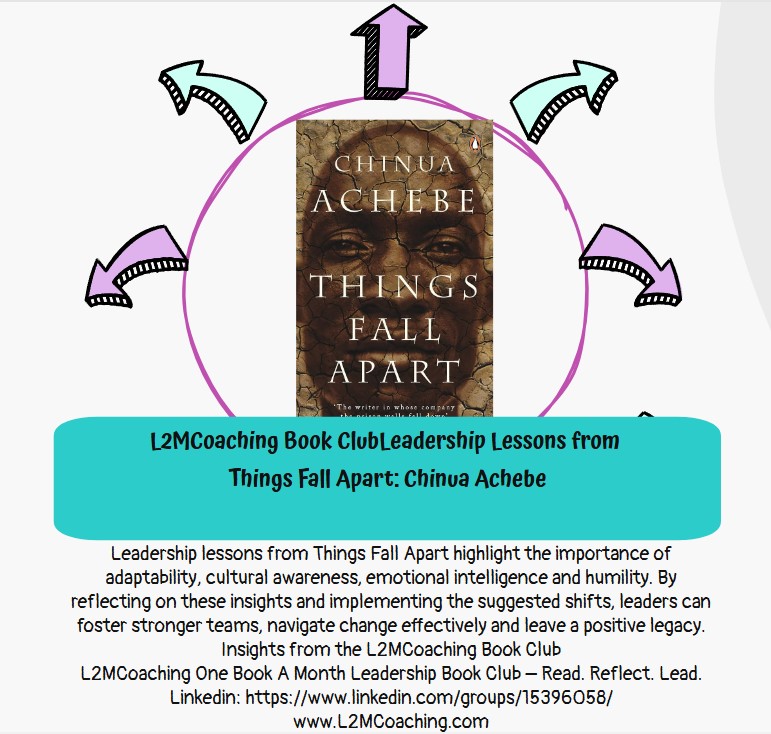
To support reflection beyond the session, I’ve created a Leadership Lessons Cheat Sheet from Things Fall Apart — designed as a practical takeaway for leaders, coaches, and learners.
Revisit the lessons when facing change or challenge
Final Reflection
Things Fall Apart reminds us that leadership doesn’t fail because of a lack of strength.
It fails when:
fear replaces reflection
listening stops
strengths go unchecked
and adaptation is mistaken for weakness
Leadership that listens, reflects and evolves is leadership that endures.
Thank you again to everyone who joined us. I’m already looking forward to our next Book Club session Brian Tracy's Eat That Frog and the conversations it will spark.
Reading creates awareness. Coaching creates lasting change. Book a free 30-minute conversation to explore what this could look like in your specific situation.
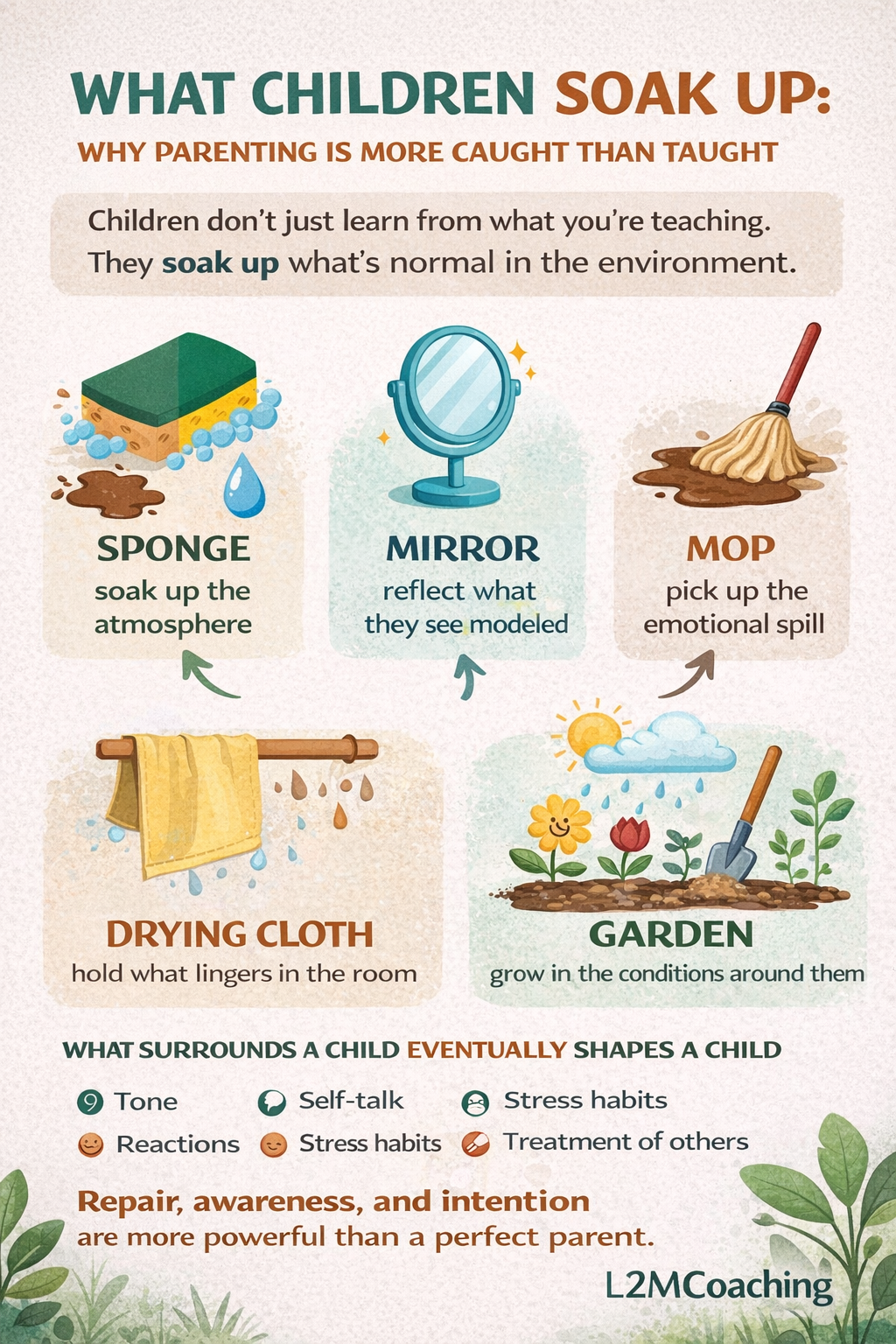
Children learn from more than words. They learn from tone, habits, reactions, emotional safety, and what becomes normal around them. As parents, guardians and carers, we often focus on what we need to say to our children. We remind them to be kind, calm, honest, respectful and confident. Those messages matter, but children are learning from far more than direct instruction. They are also learning from the environment they grow up in. Children absorb more than advice. They take in the...
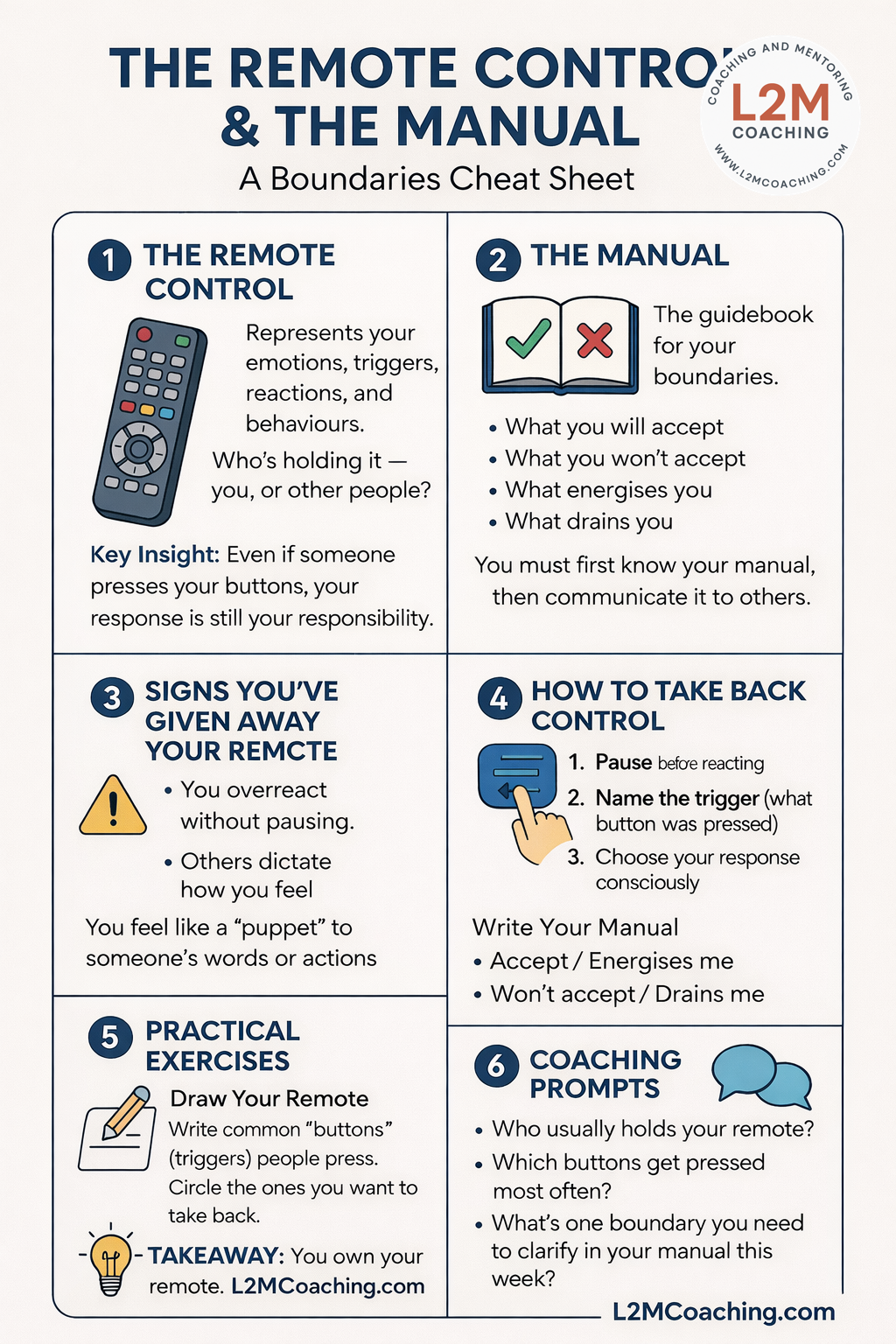
Emotional Responsibility, Boundaries, and the Power to Change Your Relationships “They made me angry.” “They triggered me.” “They always push my buttons.” We say these phrases so casually that we rarely stop to question them. But inside those everyday statements is something profound. When we say someone made us angry, we are quietly handing them control over our emotional world. We are suggesting that our internal state lives in someone else’s hands. And that leads to one powerful question:...
In recent weeks, public conversations around immigration, identity, and belonging have become louder, sharper, and more polarised. Words like “colonisation,” “burden,” “invasion,” and “outsiders” are being used casually in mainstream spaces often without context, evidence, or empathy and when narratives like this spread, we need to pause and ask: Who benefits from this story? Who is being blamed? Who is being distracted? And who is staying silent? History has something important to teach us...