What Children Soak Up: How Parenting Environment Shapes Behaviour
LM
Lloyd Munyaviri
ICF Certified Coach
Children learn from more than words. They learn from tone, habits, reactions, emotional safety, and what becomes normal around them. As parents, guardians and carers, we often focus on what we need to say to our children. We remind them to be kind, calm, honest, respectful and confident. Those messages matter, but children are learning from far more than direct instruction. They are also learning from the environment they grow up in. Children absorb more than advice. They take in the...
Children learn from more than words. They learn from tone, habits, reactions, emotional safety, and what becomes normal around them. As parents, guardians and carers, we often focus on what we need to say to our children. We remind them to be kind, calm, honest, respectful and confident. Those messages matter, but children are learning from far more than direct instruction. They are also learning from the environment they grow up in.
Children Learn What Feels Normal
Children are always learning what is normal.
If calm is normal, they begin to absorb calm.If shouting is normal, they begin to absorb shouting.If honesty, repair, and respect are part of daily life, those patterns begin to shape them too.
This is why parenting is not only about correcting behaviour. It is also about shaping the emotional climate children grow inside.
What children experience repeatedly often becomes what they expect, trust and repeat.
They Absorb More Than We Realise
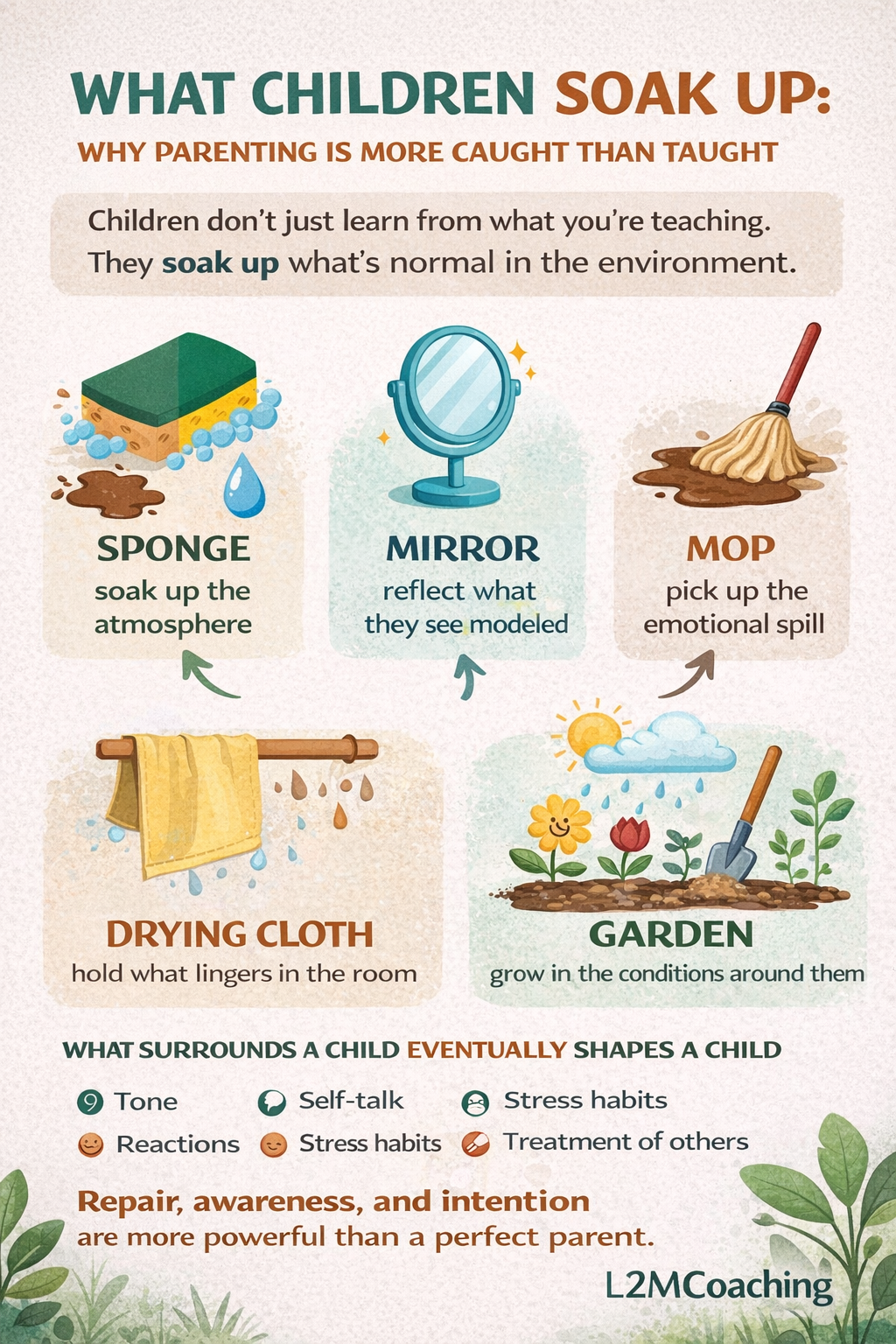
People often describe children as sponges, and that picture helps. A sponge soaks up what surrounds it.
But there are other useful ways to think about it too.
Children can be like:
A sponge - soaking up the emotional atmosphere
A mirror - reflecting what they see modelled
A mop - picking up emotional spills in the room
A drying cloth - holding onto what lingers after a tense moment
A garden - growing in response to the conditions around them
Each metaphor points to the same truth:
Children absorb patterns, not just lessons. Children do not only learn through instruction. They also absorb what surrounds them every day.
Behaviour Teaches Louder Than Instruction
A parent may say, “Stay calm,” but if calm is rarely modelled, the child may learn something very different.
A parent may say, “Believe in yourself,” but if they constantly criticise themselves, the child may absorb self-judgment instead.
A parent may say, “You can talk to me,” but if honesty is met with anger, panic, or shame, the child may learn that truth is unsafe.
Children are not only listening.They are watching, feeling, and interpreting what daily life teaches them.
"Children do not only become what they are told. They are shaped by what they are consistently exposed to."
What Children May Be Internalising
Without anyone directly teaching it, children may be learning:
how to handle stress
how to respond to conflict
whether mistakes are safe
how love is expressed
what respect looks like
whether their voice matters
how to speak to themselves
what relationships feel like
whether emotions are safe to express
Sometimes a child’s behaviour is not just defiance.
Sometimes it is imitation.Sometimes it is adaptation.Sometimes it is a response to the emotional climate around them.
Behaviour is often communication shaped by environment.
This Is Not About Perfect Parenting
This message is not about perfection. It is about awareness. Children do not need perfect parents. They need parents who are willing to reflect, repair and grow. One of the most powerful things a parent can model is how to come back after getting it wrong.
Saying:
I was wrong
I am sorry
Let me try again
That was not your fault
…teaches accountability, humility, trust, and emotional safety.
"Repair is teaching too."
The Environment Is Always Teaching
Children notice:
how adults speak to each other
how stress is handled
how adults speak about themselves
whether mistakes are met with shame or support
whether home feels rushed, critical, tense, warm, or calm
In many ways, the environment becomes the lesson before words do.
That is why one of the most powerful questions a parent can ask is this:
Question to Parents & Guardians: What is my child soaking up from being around me?
Small Shifts Can Make a Big Difference
Change does not always begin with something dramatic. Often it starts with small, repeated shifts.
You might begin by:
lowering your tone
pausing before reacting
apologising sooner
reducing harsh self-talk
creating more emotional safety
being more intentional about the atmosphere in your home
Small changes, repeated consistently, can shape a child powerfully over time.
"Children remember repeated experiences more than perfect speeches."
A Simple Reflection for Parents
Take a moment to ask yourself:
What emotional atmosphere is most common in my home?
What does my child see me do when I am stressed?
How do I speak about myself in front of them?
What do I model about conflict, apology and self-control?
If my child copied my emotional habits, which ones would I be proud of?
Which ones would I want to change?
These are not easy questions, but they are powerful ones. Awareness is often where healthier parenting begins.
Final Thought
Children do not only grow from what we tell them.
They grow inside what we repeatedly show them.
So yes, keep teaching, guiding and encouraging. But also remember that what surrounds a child will often shape a child.
That is why parenting is not only about what is taught.
It is also about what is caught.
"What surrounds a child eventually shapes a child."
Support for Parents and Families
We can all do with some support at some point, at L2MCoaching, I support parents, teens, and families through reflective coaching that helps build emotional awareness, stronger communication, and healthier relational patterns.
If you would like support on your parenting journey, get in touch through L2MCoaching.
Apply This to Your Own Life
Want support putting this into practice?
Reading creates awareness. Coaching creates lasting change. Book a free 30-minute conversation to explore what this could look like in your specific situation.
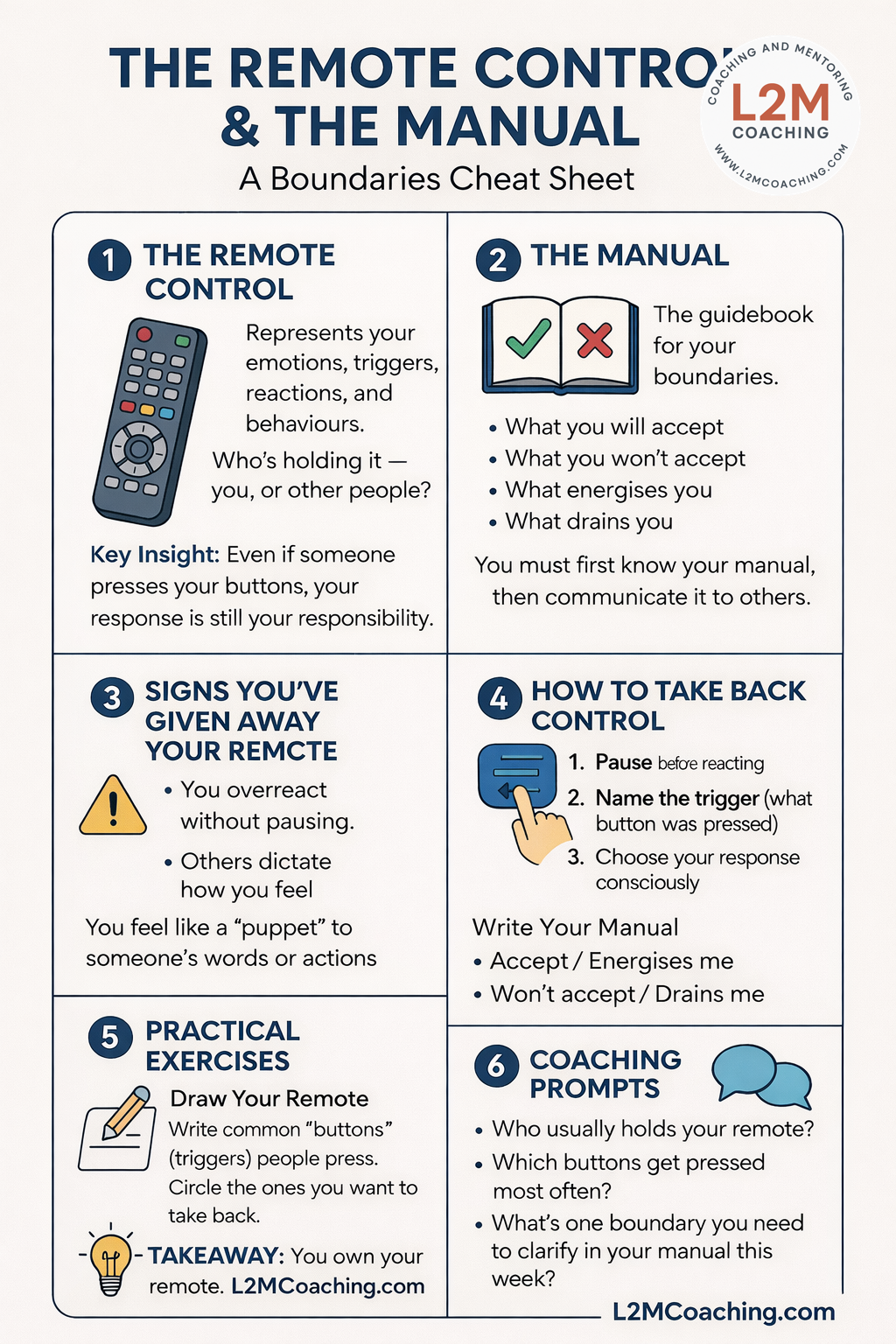
Emotional Responsibility, Boundaries, and the Power to Change Your Relationships “They made me angry.” “They triggered me.” “They always push my buttons.” We say these phrases so casually that we rarely stop to question them. But inside those everyday statements is something profound. When we say someone made us angry, we are quietly handing them control over our emotional world. We are suggesting that our internal state lives in someone else’s hands. And that leads to one powerful question:...
In recent weeks, public conversations around immigration, identity, and belonging have become louder, sharper, and more polarised. Words like “colonisation,” “burden,” “invasion,” and “outsiders” are being used casually in mainstream spaces often without context, evidence, or empathy and when narratives like this spread, we need to pause and ask: Who benefits from this story? Who is being blamed? Who is being distracted? And who is staying silent? History has something important to teach us...
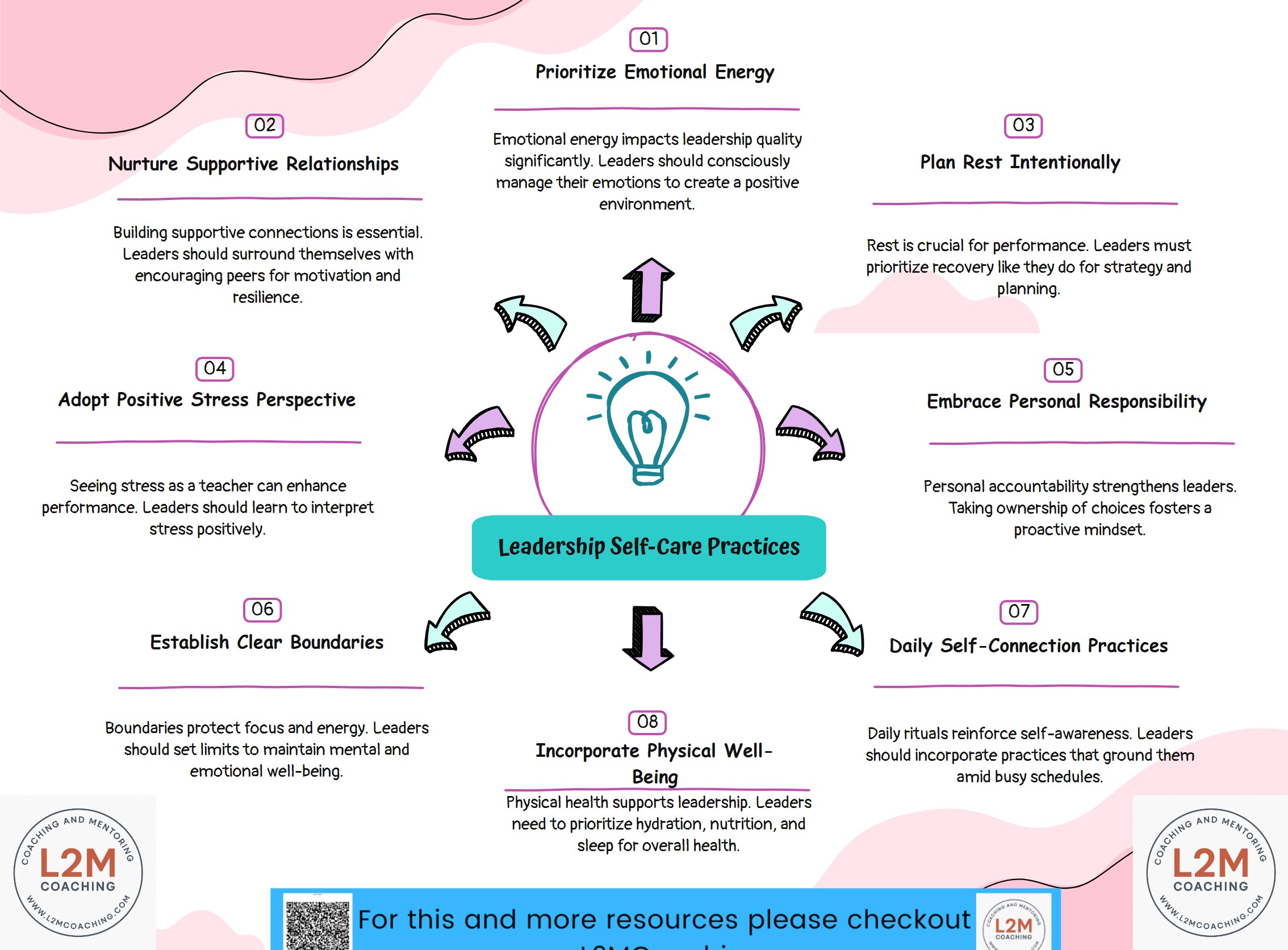
Leadership is not just about strategy, execution and performance. It’s about capacity . Your capacity to think clearly.Your capacity to regulate your emotions.Your capacity to lead with presence rather than pressure. And make no mistake your capacity is fuelled by self-care . Self-care is not a luxury. It is leadership infrastructure. Below are L2M Coaching’s Leadership Practices for Self-Care a practical guide for leaders, parents, coaches, and anyone who carries responsibility. ⭐ 1....