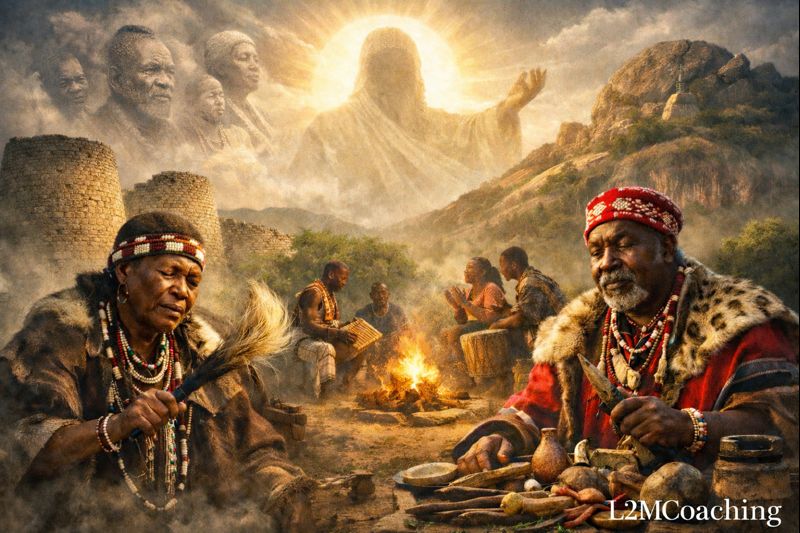
Amadlozi, Mudzimu, Mashavi, Spirit Mediums, Traditional Healers, and Mwari or Part of the Understanding Shona & Ndebele Culture Learning Series by L2M Coaching A relational way of understanding life In both Shona and Ndebele cultures, life is understood as relational rather than individualistic . A person is not seen as a standalone unit, but as someone shaped by: Family and lineage Community and land History and memory Responsibility to past and future generations Spiritual language within...
Amadlozi, Mudzimu, Mashavi, Spirit Mediums, Traditional Healers, and Mwari or
Part of the Understanding Shona & Ndebele Culture Learning Series by L2M Coaching
A relational way of understanding life
In both Shona and Ndebele cultures, life is understood as relational rather than individualistic.
A person is not seen as a standalone unit, but as someone shaped by:
Spiritual language within these cultures is therefore not primarily about belief. It is a framework for organising meaning, ethics, responsibility, healing and continuity.
Mwari (Nkulunkulu): the Supreme Creator
Mwari is understood as the ultimate source of life, order and moral meaning.
Key characteristics include:
Mwari represents:
Engagement with Mwari typically takes place through:
This indirect approach reflects reverence, humility and collective responsibility, rather than distance.
Ancestors: Vadzimu (Shona) / Amadlozi (Ndebele)
Ancestors are deceased family members remembered for living responsibly within the moral expectations of their community.
They are:
Ancestors function as moral continuity.
They symbolise:
When ancestors are said to “intervene,” this is commonly understood as a signal that:
This is less about punishment and more about realignment and accountability.
Spirit mediums: Masvikiro / Izangoma
Spirit mediums are individuals who act as interpreters and communication channels between the spiritual and physical worlds.
Important distinctions:
Spirit mediums contribute by:
In modern terms, spirit mediums can be understood as meaning interpreters or facilitators, supporting collective reflection and alignment.
Traditional healers: N’anga (Shona) / Izinyanga (Ndebele)
The English term “witchdoctor” is widely used but is inaccurate and misleading.
Traditional healers are better understood as practitioners of indigenous health, care and healing systems.
Their work may include:
Not all traditional healers are spirit mediums, many rely on:
Healers are traditionally accountable to:
Mashavi: non-ancestral spirits
Mashavi are among the most misunderstood elements of this worldview.
They are:
Mashavi may be understood as:
When unrecognised or unmanaged, mashavi may cause distress. When acknowledged and integrated, they may be associated with healing ability, insight or specialised roles.
In contemporary language, mashavi can be compared to unintegrated psychological or emotional forces that require recognition rather than suppression.
How these elements fit together
Taken together, this worldview forms a relational system, rather than a hierarchy of power:
Each layer supports balance, accountability and continuity.
Why this understanding still matters
This worldview offers valuable insight into:
It reminds us that progress without memory risks disconnection and healing without relationship is incomplete.
Closing reflection
Rather than asking:
A more useful question may be:
That question alone often opens meaningful, respectful conversations across cultures and generations.
Series: Understanding Shona & Ndebele Culture
By: L2M Coaching
Purpose: Cultural learning, preservation, and intergenerational dialogue
A note on intent, accuracy, and living knowledge
This article is written as a learning and preservation piece. It represents the best collective understanding currently available, drawn from lived experience, oral tradition, cultural teaching and reflective interpretation. As with all living cultures, Shona and Ndebele worldviews are not uniform, fixed or final. Practices and meanings may vary by lineage, region, historical period and personal experience.
This piece does not claim absolute authority.
Instead, its purpose is to:
If aspects of this interpretation are incomplete, debated or later understood differently, that is not a failure of the work. It is evidence that the culture itself is alive, evolving and participatory. Contributions, reflections and clarifications are welcomed as part of keeping this knowledge relevant and grounded.
Reading creates awareness. Coaching creates lasting change. Book a free 30-minute conversation to explore what this could look like in your specific situation.
Discussion
No comments yet — be the first to share your thoughts.
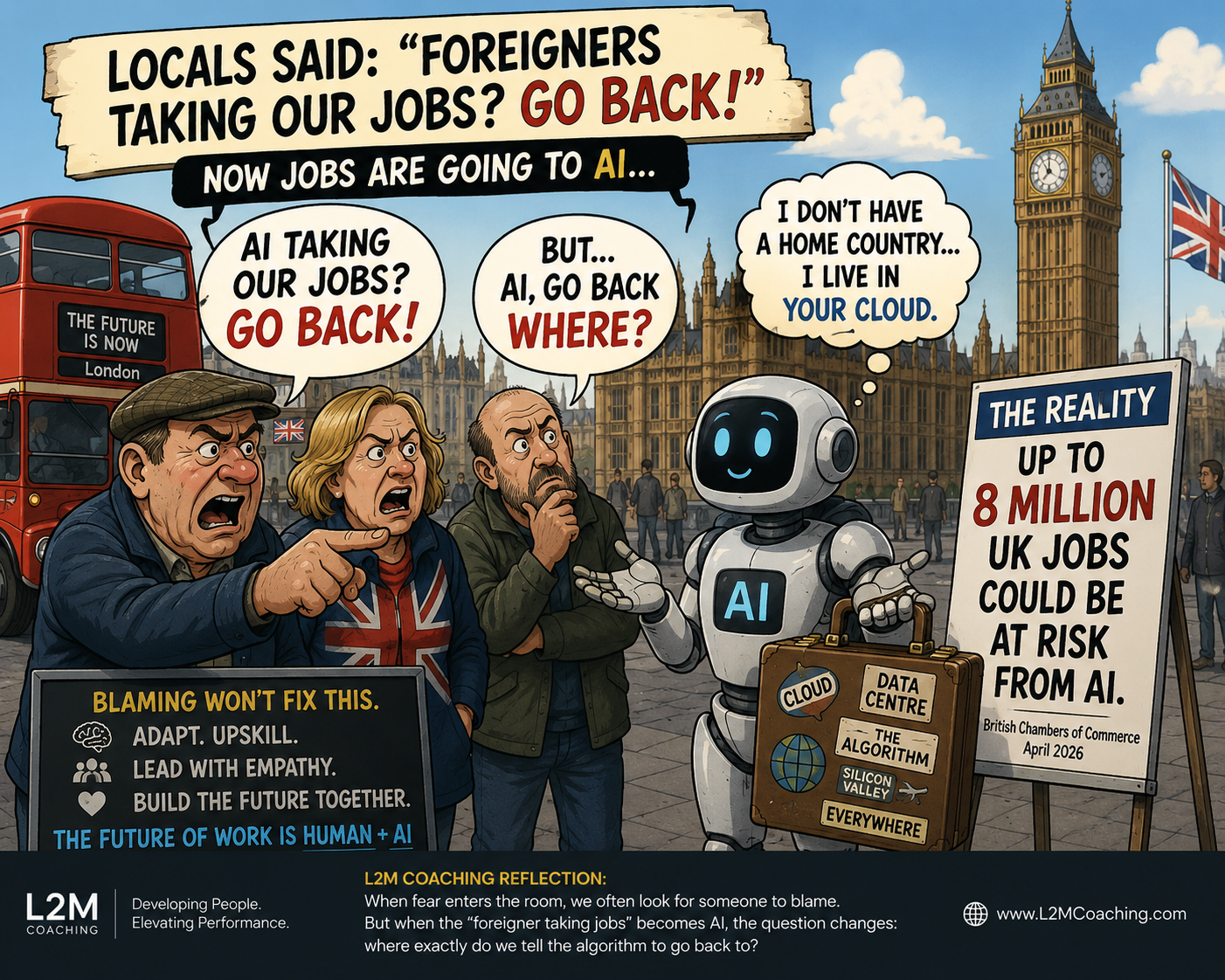
By Lloyd Munyaviri | L2MCoaching After Blaming Foreigners, Who Do We Blame When AI Takes the Jobs? For years, in many societies, when people have felt economically squeezed, one of the easiest narratives has been: “foreigners are taking our jobs.” We have heard it in the UK. We have heard it in South Africa. We have heard it in communities where people are struggling with unemployment, poor wages, insecure work, rising costs, stretched public services and a deep sense that life is becoming...
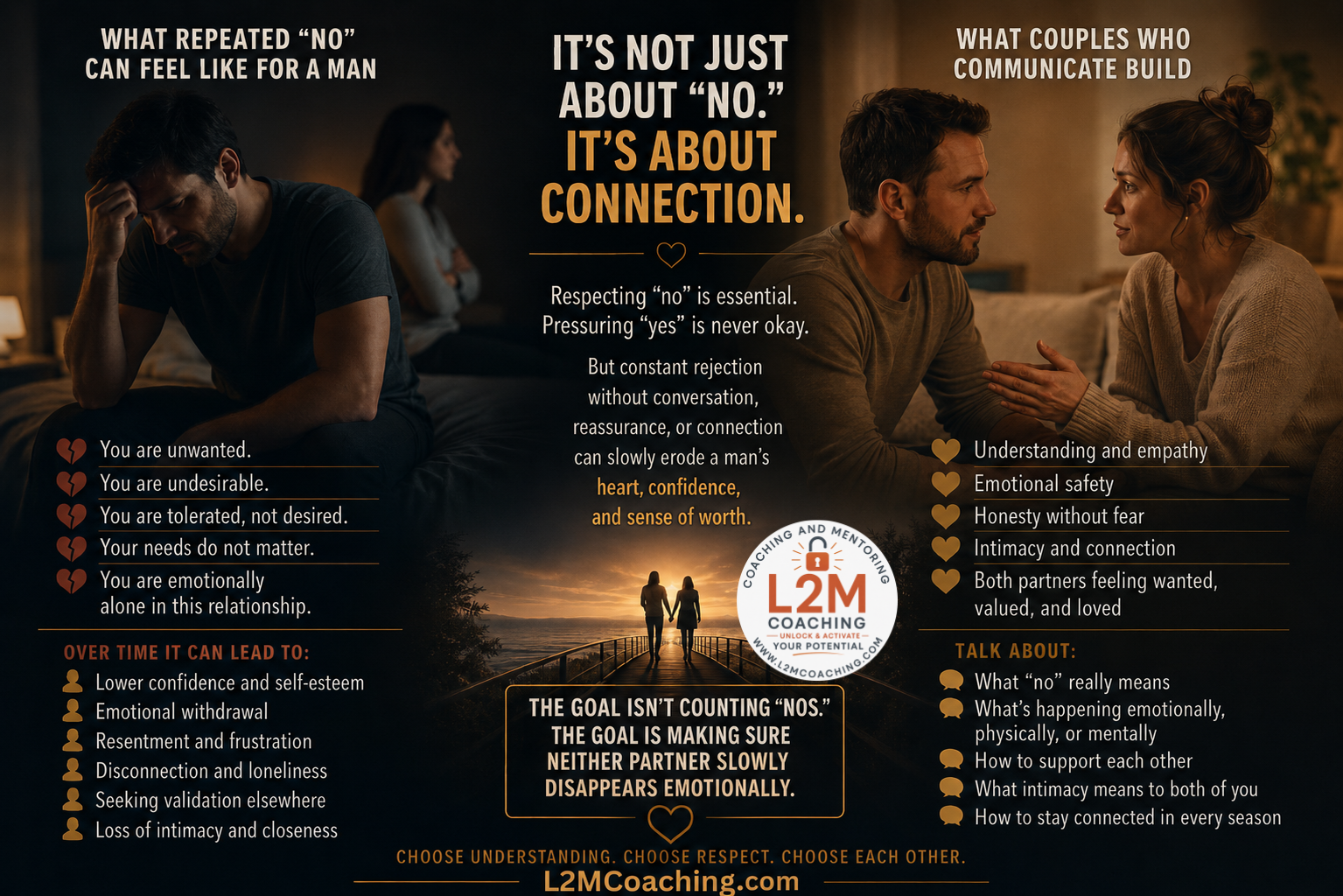
As part of the Monthly Connect Better Podcast Series we run at L2MCoaching (everyone is invited) once a month, a number of topics for discussion are suggested and this one is a popular request and I hope to do it justice: In relationships, one of the hardest conversations to have is the conversation about rejection, intimacy, emotional needs and unmet expectations. It is a sensitive subject because it can easily be misunderstood. When a partner says “no”, that “no” must be respected. No one...
Why knowledge alone is not enough and what we need to learn instead. We’ve been conditioned to believe something powerful: “Education is the answer.” Say it enough times, and it becomes truth. Build systems around it, and it becomes policy.Repeat it to selves and our children and it becomes belief. But let’s pause for a moment and ask a question that rarely gets asked: Education… then what? Because if education truly was the answer, we wouldn’t have so many educated people feeling stuck,...