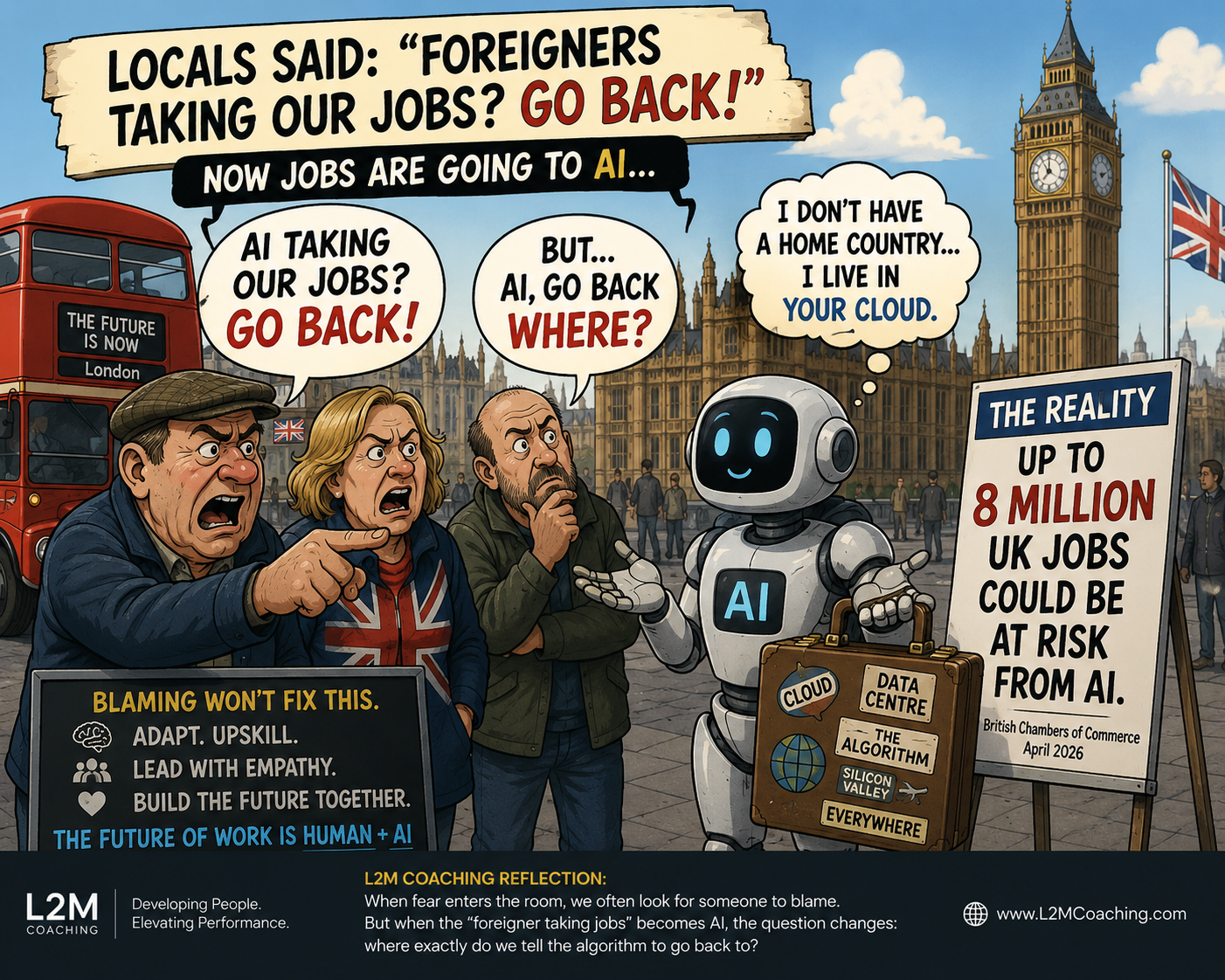
In recent weeks, public conversations around immigration, identity, and belonging have become louder, sharper, and more polarised.
Words like “colonisation,” “burden,” “invasion,” and “outsiders” are being used casually in mainstream spaces often without context, evidence, or empathy and when narratives like this spread, we need to pause and ask:
Who benefits from this story?
Who is being blamed?
Who is being distracted?
And who is staying silent?
History has something important to teach us here.
From
Václav Havel, who spoke about the moral power of “living in truth”…
To Martin Niemöller, who warned us about the dangers of quiet compliance…
To Martin Luther King Jr., who challenged injustice wherever it appeared…
To Nelson Mandela, who showed the world that dignity and reconciliation are acts of strength…
Their message was consistent:
Silence strengthens injustice.Courage changes narratives.
The Problem With Simplified Stories
One of the most damaging aspects of today’s immigration debate is how easily complex human lives are reduced to labels. “Immigrant” becomes a single category, A single stereotype, A single problem.
But that is not reality.
Immigrants include:
Yes Some are struggling, some are thriving, some are rebuilding and some are contributing quietly every day just liek everyone else and importantly immigrants are not defined by race.
We can be Black we can be Brown we can be White and we are from eberywhere, we can be from Europe, America, Australia, Africa, Asia or anywhere else that isn’t “local.”
Yet public narratives often default to narrow, racialised images that fuel fear rather than understanding. This distortion is not accidental, It is convenient.
When people are busy blaming “others,” they stop questioning systems.
Who Is Speaking Up?
One of the hardest questions in moments like this is not about those spreading misinformation. It is about those who say nothing. Where are the allies when false stories circulate? Where are the voices in WhatsApp, Facebook and other social media groups, boardrooms, churches, workplaces and online spaces? Where is the challenge when conversations turn toxic?
Support that exists only in private is not enough.
Allyship is not a silent agreement. It is visible action.
It is:
Courage shows up in everyday conversations, not just public statements.
A Challenge to Immigrants Too
This conversation also requires honesty within immigrant communities.
As immigrants, we also have responsibility.
Are we telling our stories?
Are we showing our contribution?
Are we challenging falsehoods when we see them?
Are we engaging constructively?
Are we building bridges?
Or are we withdrawing, hoping controversy will pass us by?
Silence may feel safe in the short term.But it leaves space for distortion to grow.
Shaping narratives requires participation.
The Role of Organisations and Networks
This is not just about individuals.
It is also about institutions.
Organisations, networks, charities, businesses, professional bodies community groups benefit from diverse communities every day.
So the question is:
What are they doing in return?
Are they:
Values mean little without visible practice.
Leadership Is Not Comfort
True leadership has never been comfortable.
It has always required:
Avoiding difficult conversations does not preserve harmony.
It postpones conflict and deepens division.
Every generation is tested on whether it will prioritise comfort or conscience.
Ours is no different.
A Question for All of Us
So here is the question I want to leave you with:
What part are you playing in shaping the narrative?
What conversations are you willing to have?
What misinformation are you willing to challenge?
What silence are you willing to break?
And what are the communities and organisations around you doing to stand with truth and dignity?
We do not change society through outrage alone.We change it through courage, consistency, and character.
History is watching.And so are the next generations.
Lloyd Munyaviri Founder, L2M CoachingLeadership | Emotional Intelligence | Courageous Conversations