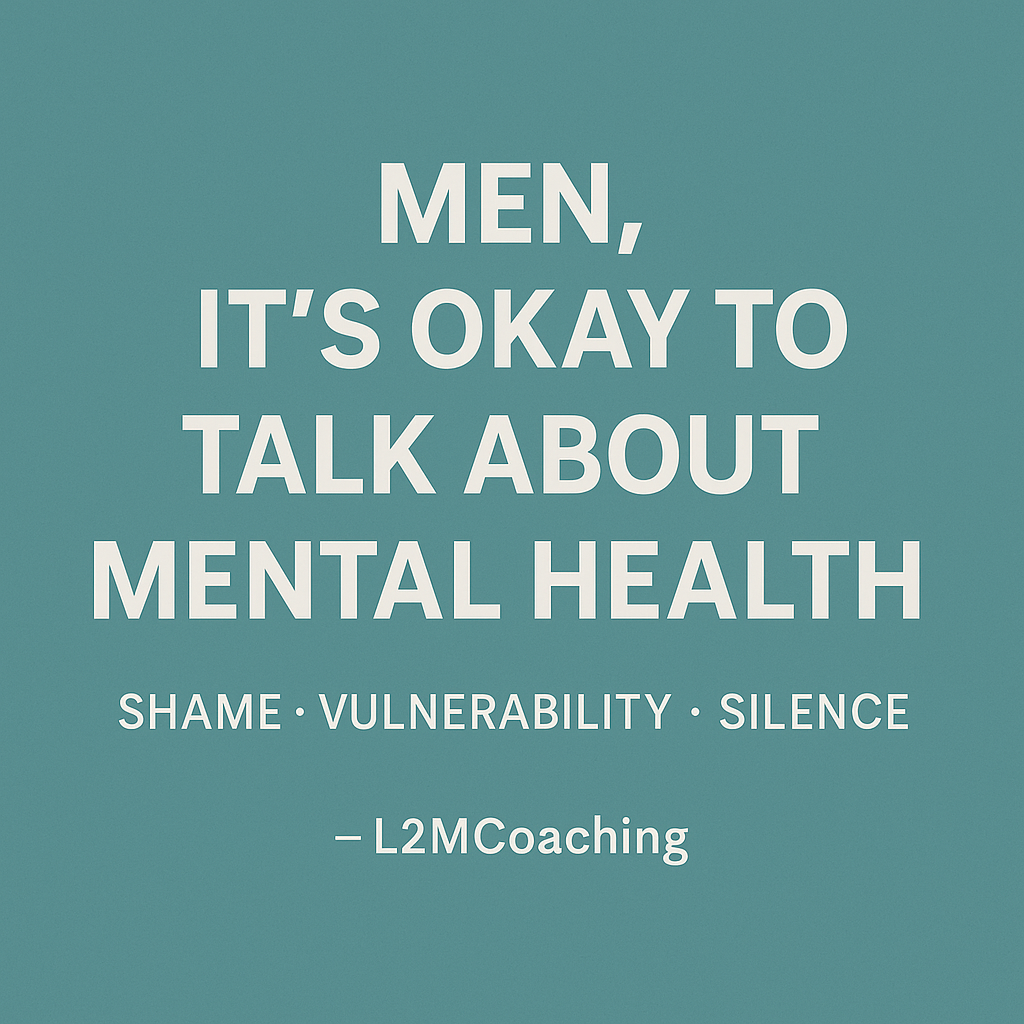
🧠 Men, Mental Health & Misunderstanding Why We Must Replace Shame with Compassion and Pain with Self-Care
LM
Lloyd Munyaviri
EMCC Accredited Coach
Men, Mental Health & Misunderstanding: A Call for Compassion When we talk about suicide, especially among men, the conversation is often...
Men, Mental Health & Misunderstanding: A Call for Compassion
When we talk about suicide, especially among men, the conversation is often clouded by silence, shame and misunderstanding. Despite growing awareness of mental health, outdated beliefs still surface beliefs that equate emotional struggle with weakness and vulnerability with failure. And sometimes, those beliefs show up in the very places where compassion is needed most.
One recent story deeply unsettled me. A man had died by suicide a moment that should have been met with care and mourning. Instead, his funeral was marked by judgment. He was labelled selfish, even cowardly. Rather than honouring his life, his memory was overshadowed by stigma. His grieving family, already bearing the weight of loss, faced harsh scrutiny as if their pain invited shame.
A few years earlier, we lost a university colleague. Within our student group, some claimed he wasn’t “strong enough” that he didn’t represent what “real men” should be. That kind of thinking isn’t just misguided it’s harmful. It reinforces silence. It turns suffering into a secret. And it makes emotional pain harder to talk about when talking is exactly what’s needed.
Would you like me to now reformat the full blog post with this as the new opening?
🧠 Suicide Is Not Cowardice. It’s a Crisis of Pain.
When someone dies by suicide, they are not failing at life.They are not weak.They are not giving up in a way that deserves ridicule. They are often experiencing overwhelming emotional pain, trauma, or a sense of hopelessness that they can’t express or escape. And still, our conversations about suicide especially when it involves men often fall back on outdated myths of masculinity and shame.
📊 The Reality: Men Are Struggling — Silently
According to the UK Government’s most recent Near Real -Time Suspected Suicide Surveillance Report, the suicide rate in October 2024 stands at 9.5 deaths per 100,000 people. For men, that rate climbs to 14.4 per 100,000, compared to 5.0 for women.
The age group most affected? Men aged 45 to 64 with younger and older males not far behind.And yet … we still expect men to “man up.” We still use shame to explain away tragedy. We still confuse vulnerability with weakness.
This silence? This stigma? It’s costing lives.
💬 What Real Strength Looks Like
True strength isn’t stoicism. It’s staying when everything in you wants to disappear.It’s reaching out when the voice in your head tells you not to.It’s asking for help even when you don’t have the words.
It’s also us the community, the leaders, the friends, the coaches, the parents refusing to shame those who are struggling and learning instead how to listen, how to support, and how to care.
🧭 A Better Conversation Starts With This:
And when they open up even a little, hold space. Not judgment.
❤️ Final Word
Whether you’re a coach, a father, a son, a manager, or a friend this message is for you:
Time to change how we show up, how we speak and how we create space where healing, not hiding, is the norm.
📝 If this resonates with you, I invite you to read, reflect, and share.Together, we can do better for ourselves, for our brothers, for our communities.
📊 Source:UK Gov – Near to Real Time Suspected Suicide Surveillance Report
Reading creates awareness. Coaching creates lasting change. Book a free 30-minute conversation to explore what this could look like in your specific situation.
Discussion
No comments yet — be the first to share your thoughts.
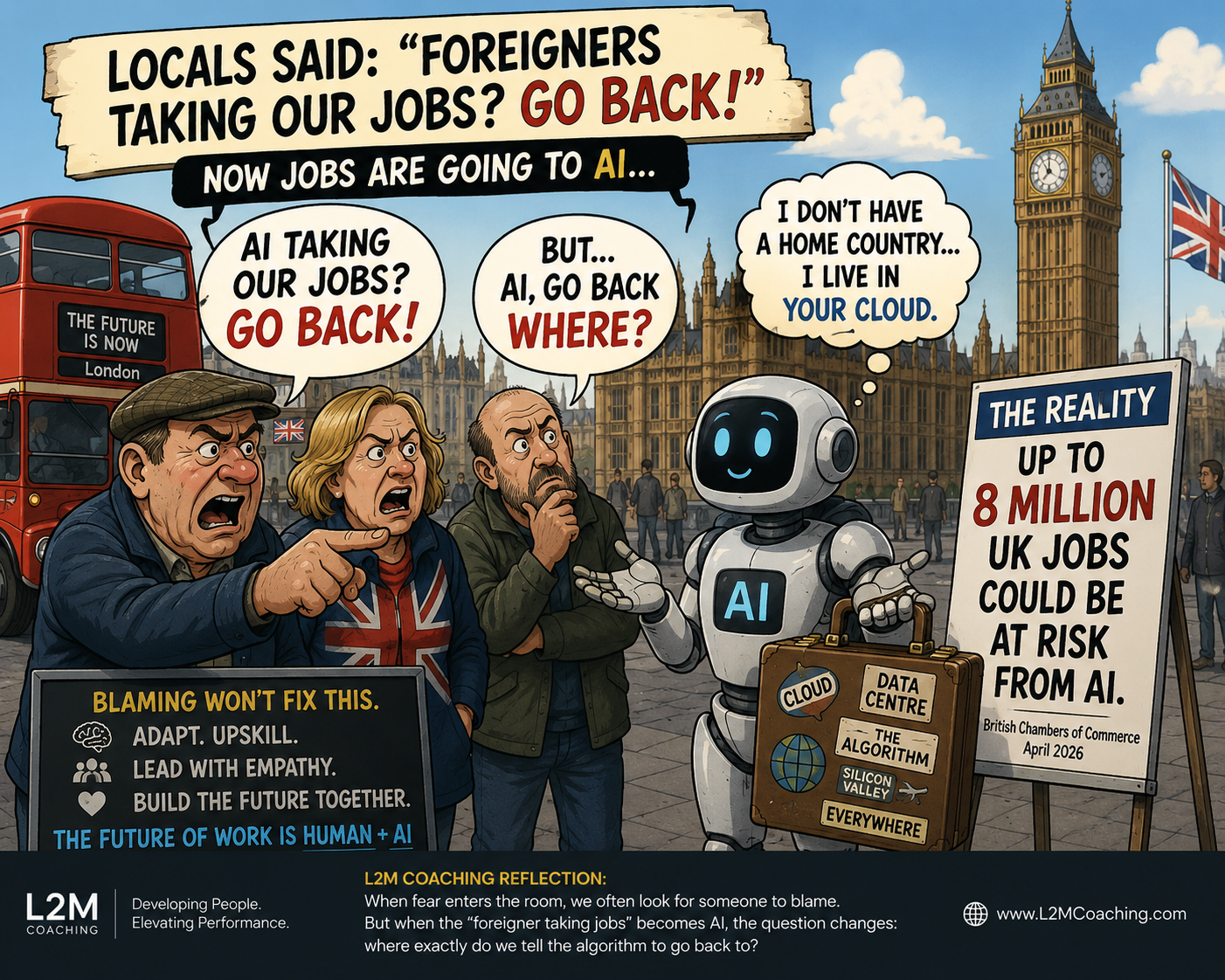
By Lloyd Munyaviri | L2MCoaching After Blaming Foreigners, Who Do We Blame When AI Takes the Jobs? For years, in many societies, when people have felt economically squeezed, one of the easiest narratives has been: “foreigners are taking our jobs.” We have heard it in the UK. We have heard it in South Africa. We have heard it in communities where people are struggling with unemployment, poor wages, insecure work, rising costs, stretched public services and a deep sense that life is becoming...
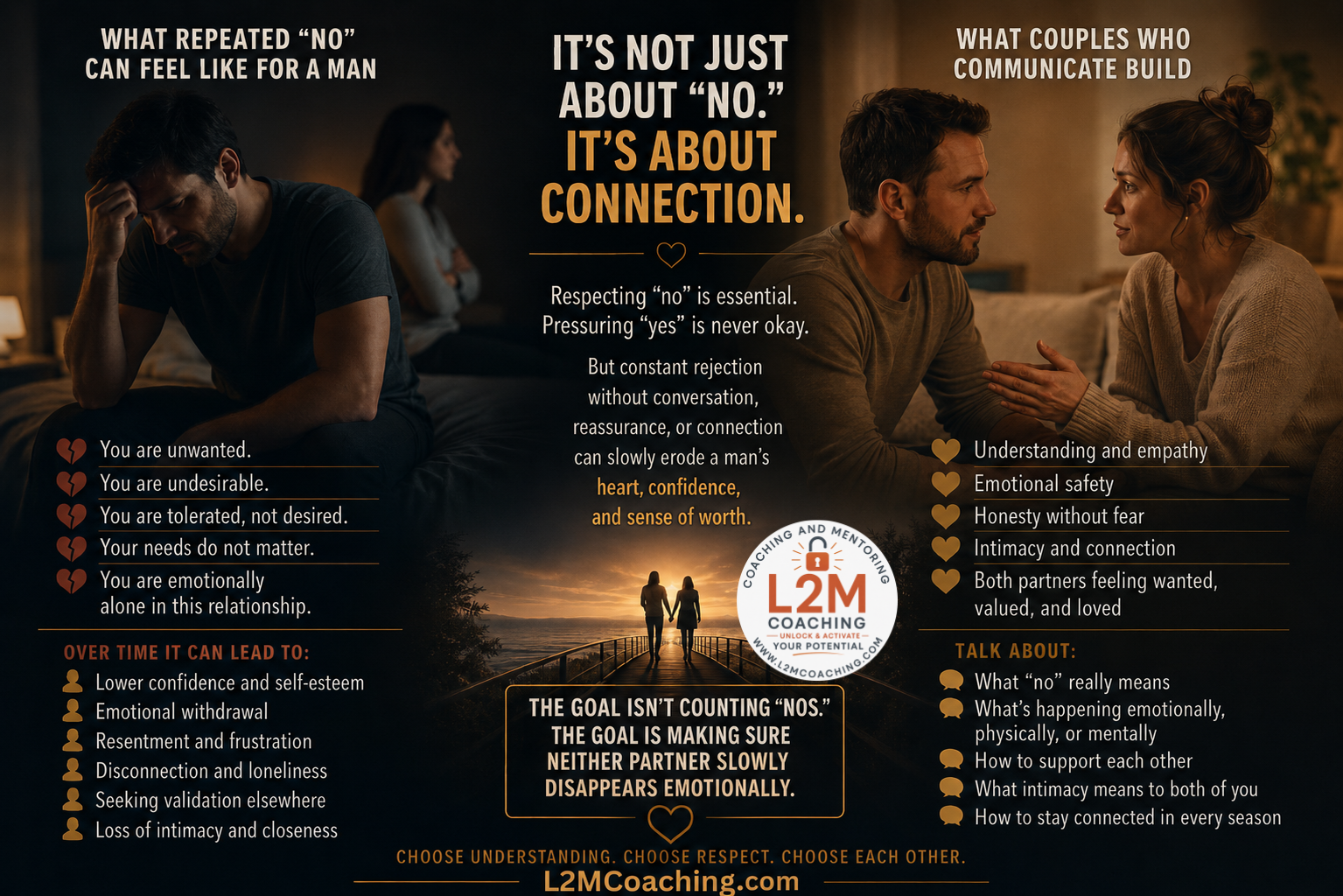
As part of the Monthly Connect Better Podcast Series we run at L2MCoaching (everyone is invited) once a month, a number of topics for discussion are suggested and this one is a popular request and I hope to do it justice: In relationships, one of the hardest conversations to have is the conversation about rejection, intimacy, emotional needs and unmet expectations. It is a sensitive subject because it can easily be misunderstood. When a partner says “no”, that “no” must be respected. No one...
Why knowledge alone is not enough and what we need to learn instead. We’ve been conditioned to believe something powerful: “Education is the answer.” Say it enough times, and it becomes truth. Build systems around it, and it becomes policy.Repeat it to selves and our children and it becomes belief. But let’s pause for a moment and ask a question that rarely gets asked: Education… then what? Because if education truly was the answer, we wouldn’t have so many educated people feeling stuck,...